Streaming from a corner of a one-bedroom works for a while, right up to the night somebody walks behind the camera in a towel, or the neighbor starts drilling halfway through a session.
Moving somewhere bigger fixes most of that, but only if the new place is chosen with the stream in mind rather than purely on the number of bedrooms and the rent.
A few of the things that matter most for streaming are impossible to change after you sign, so they’re worth checking while you’re still viewing places.
Check the Upload Speed Before the Square Footage
For anyone going live, upload speed matters more than the layout.
Find out which providers serve that specific address and what upload speeds they offer there, since plans advertised for a city often don’t reach every street, and download numbers tell you nothing about whether a stream will hold at a decent bitrate.
Ask whether the line into the building is fiber or cable, find out if the apartment is already wired, and book the installation the day the keys are confirmed. An empty week with no connection costs a streamer more than it costs anybody else in the building.
Think About Sound Before You Think About Decor
Noise works both ways, and a bigger room is often acoustically worse than the cramped one you came from.
Hard floors, bare walls, and a high ceiling make a room echo, which a microphone picks up immediately, so look for a space you can soften with a rug, curtains, and something on one wall rather than a glass box with great light.
The other direction matters every bit as much, so listen for traffic, a train line, thin walls, and whoever lives above you. Viewing a place at eight in the evening tells you far more about the noise than a Tuesday morning appointment ever will.
Getting the Gear There in One Piece
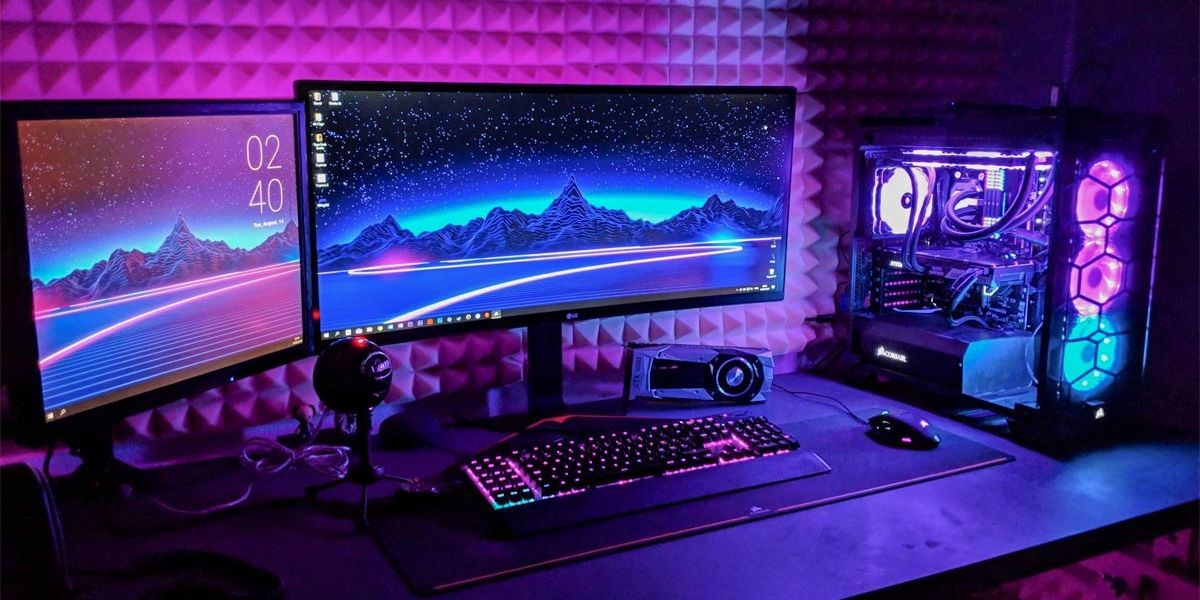
A streaming setup is two or three computers’ worth of hardware, plus lights, microphones, a camera, and more cable than most houses contain in total.
Original boxes if you kept them, and firm padding on all six sides if you didn’t, with towers upright and heavy coolers or large graphics cards removed and packed separately. Screens travel upright with cardboard across the panel and nothing resting on them.
People hiring experienced cross-country movers for a long trip tend to have the computers, monitors, lights, and audio equipment inventoried and crated as separate items, with a written estimate and proof of insurance before anything is loaded, and photographs of each piece working beforehand in case something arrives broken.
The microphone, the camera, the drives, and the laptop are better off in the car with you, because those are the pieces that let you be back online the next day rather than whenever the truck turns up.
Plan the Shot, Not Only the Desk
The room is a set as well as a workspace, and that changes which wall the desk belongs against.
Work out what is behind you on camera before anything gets assembled, since a doorway, a hallway, or a kitchen in the shot means people walking through your frame all evening. A solid wall behind the chair solves it, and it keeps the audio cleaner too.
Windows are the other decision, because a window behind you blows out the exposure and a window in front of you changes color temperature through the day. Lighting you control beats daylight you don’t, so plan for curtains and a couple of lights rather than a view.
Power, Heat and the Dull Infrastructure
A streaming room draws real power and produces real heat, and both are easier to plan for than to fix later.
Count the outlets on the wall you want, find out what else is on that circuit, and use a proper surge protector rather than a strip with six things crammed into it. Run the network cable while the room is empty, since wireless is the first thing to let you down mid-stream.
Heat catches everybody out, as a closed room with two machines and three lights in it gets uncomfortable within an hour, so a window that opens or a fan in summer is worth sorting out in advance.
Get Back on Air Before the House Is Finished
The temptation is to build the perfect room first, and that’s how people end up off the schedule for a month.
Set up a simple working version on the first or second evening, meaning the machine, one screen, the microphone, and one light, then go live and tell people the room is a work in progress. Audiences are far more forgiving about a bare wall than about three silent weeks.
Then improve it slowly over the first couple of months, dealing with whatever annoys you most each time. The room you end up with will be better than the one you drew before moving, because it’s built around what the space turned out to be rather than what you hoped it would be.

Marie Foster is a reporter based in UK. Marie has also worked as a columnist for the various news sites.